
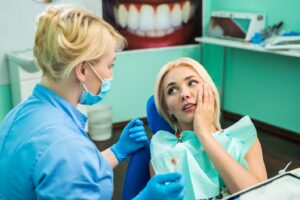
Unlike baby teeth, adult teeth are meant to last a lifetime, so unexpected movement should never be ignored. Whether your tooth became loose after an accident, sports injury, or sudden dental problem, getting prompt attention from an emergency dentist is essential. Knowing what to do in the meantime can help protect your tooth and improve the chances of saving it. Follow the steps below for a clear path to recovery!
Step 1: Stay Calm & Avoid Touching the Tooth
Your first reaction might be to wiggle the tooth to see how loose it is, but resist the temptation. Moving it repeatedly can damage the surrounding tissues and make the situation worse. Avoid biting down on the affected tooth or using your tongue and fingers to test its movement. Instead, leave it alone while you arrange an emergency dental appointment.
Step 2: Determine Whether There is an Injury
Try to identify what caused the tooth to become loose. Did you recently experience a fall, sports injury, or blow to the face? Trauma can damage the ligaments and tissues supporting your tooth or cause it to become partially displaced.
If the tooth became loose without an obvious injury, underlying problems such as advanced gum disease, infection, or teeth grinding may be responsible. Regardless of the cause, an adult tooth that suddenly becomes loose requires professional evaluation.
Step 3: Control Any Bleeding
If your gums are bleeding, gently place clean gauze over the affected area and apply light pressure. Avoid pushing directly against the loose tooth. If swelling develops, apply a cold compress to the outside of your cheek for approximately 10 to 15 minutes at a time.
If bleeding is severe or does not stop with gentle pressure, seek urgent medical attention. Heavy bleeding, facial injuries, or suspected jaw fractures may require emergency medical care.
Step 4: Avoid Certain Foods & Activities
Until you can see your dentist, avoid chewing on the affected side of your mouth. Stick to soft foods such as yogurt, mashed potatoes, scrambled eggs, and smoothies eaten with a spoon. Avoid hard, crunchy, sticky, or chewy foods that could place additional pressure on the tooth.
You should also avoid smoking, drinking alcohol, and participating in contact sports until your dentist evaluates the injury. Continue brushing and flossing carefully, but avoid disturbing the affected area.
Step 5: Contact an Emergency Dentist Immediately
Don’t wait for a loose adult tooth to tighten on its own. Contact an emergency dentist as soon as possible, even if you aren’t experiencing significant pain. Depending on the cause and severity, treatment may involve repositioning and stabilizing the tooth with a dental splint. Your dentist may also recommend X-rays to evaluate the surrounding bone and supporting structures.
If the tooth has been completely knocked out rather than simply loosened, time is especially important. Handle it by the crown, avoid touching the root, and seek immediate dental care. If possible, keep it moist in milk or an appropriate tooth-preservation solution while traveling to the dentist.
Step 6: Follow Your Dentist’s Recovery Instructions
After treatment, follow your dentist’s recommendations carefully. You may need to eat soft foods, avoid strenuous activity, and attend follow-up appointments to monitor healing. Good oral hygiene and addressing underlying dental problems are also important for preventing future complications.
A loose adult tooth is a dental emergency that deserves immediate attention. The sooner you receive treatment, the better your chances of preserving your natural tooth. If you notice unexpected tooth movement, don’t wait for the problem to get worse!
About the Practice
Do you need immediate dental attention in the West Bridgewater area? Healthy Smiles Dental offers same-day appointments for emergency patients and evening openings on Tuesday and Thursdays. With advanced imaging technology, we can offer precise diagnoses to more efficiently relieve pain and treat your issue. Reach us quickly by phone at (508) 894-8100 or contact us online.